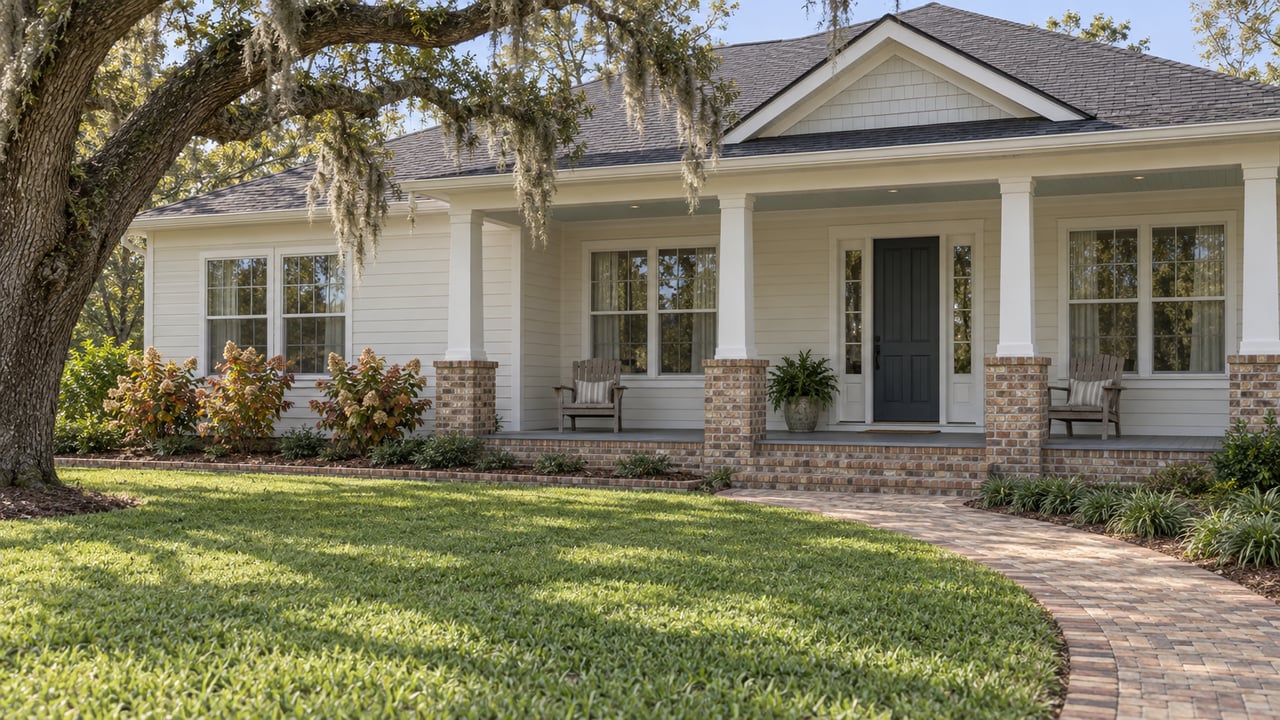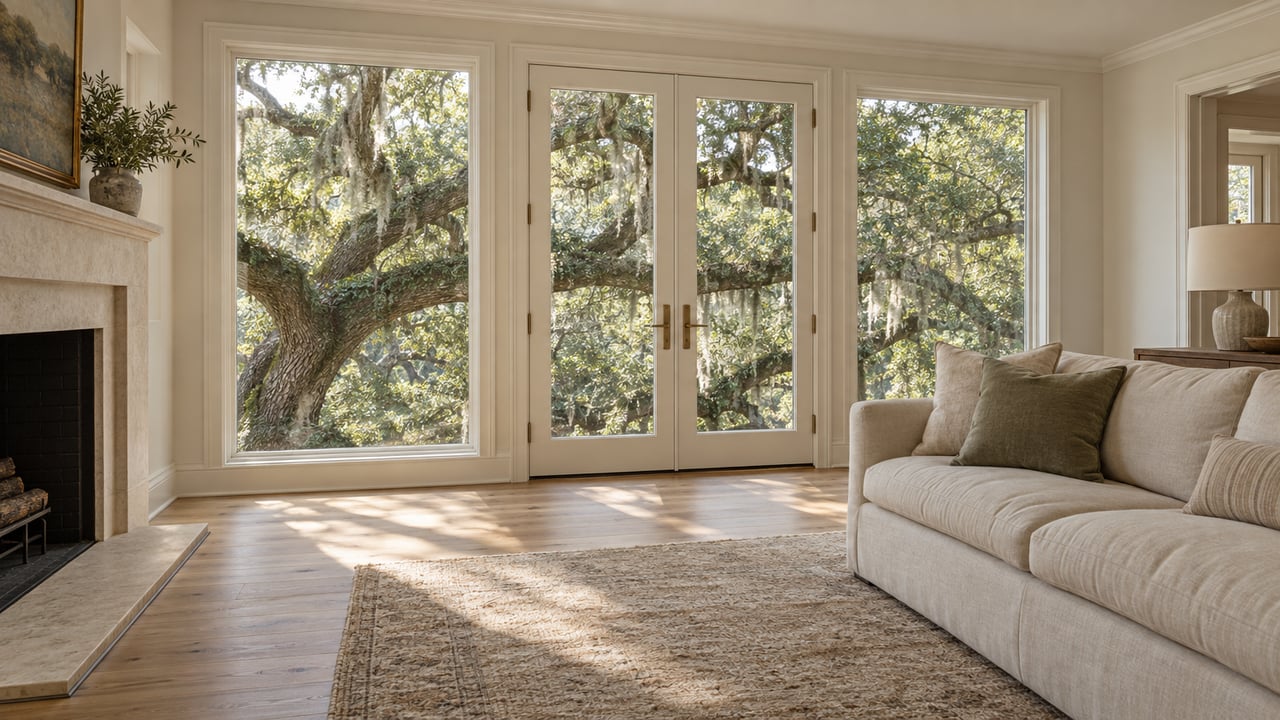
A buyer cross-shopping two Bluffton golf communities pulls up two listings side by side. Similar square footage, similar lot size, prices within a few thousand dollars of each other. On paper, it looks like an apples-to-apples decision. Then the contract for one of them arrives with a $165,000 capital contribution due at closing, and the buyer is back to a spreadsheet trying to figure out how two homes that looked comparable just stopped being comparable at all.
That gap is not a pricing error. It is the difference between how two private clubs in the same zip code handle membership, and it changes what a list price actually means depending on which community it belongs to.
What Shows Up at Closing, and What Doesn't
At Colleton River Club, ownership and membership are the same transaction. The club's own 2026 fee schedule lists a one-time Capital Contribution Fee of $165,000 for Full Membership, which includes golf, or $125,000 for the more limited Lifestyle Membership, which covers social, fitness, and waterfront access but excludes the golf courses. Either way, the fee is separate from the purchase price and paid at closing, on top of whatever the home itself costs.
At Berkeley Hall, the structure runs differently. Every home and homesite in the community, 554 of them, carries a Property Owner Equity Membership that transfers automatically with the sale. There is no separate act of joining the club as a new owner. The membership is already attached to the deed, and it moves with the property the way an easement or a covenant would. Reported figures for the recurring costs put the required social membership at $6,372 annually, with a $1,593 capital fund contribution and a one-time $35,000 membership charge, though buyers should always confirm current numbers directly with the club before writing an offer, since dues schedules get revised.
The practical result: a Berkeley Hall list price is already carrying the cost of admission inside it. A Colleton River list price is not. Two homes at the same number on the MLS can represent two very different all-in costs to close, and neither club is doing anything unusual by its own rules. They are simply structured differently, and a buyer who assumes all Bluffton private clubs work the same way will misjudge one of them.
Why the Membership Pool Is Capped at 770
The reason Berkeley Hall can bundle membership into the property this cleanly comes down to scarcity that was built into the plan from the start. The club caps total equity memberships at 770, split between the 554 Property Owner Memberships tied to actual homes and homesites, and 216 Non-Property Owner Memberships available separately. That ceiling does not move. There is no phase two of lot releases coming to add supply.
Berkeley Hall sits on 980 acres built around two Tom Fazio golf courses, and the community is often cited as the lowest-density private course layout in the Southeast, averaging 5.3 homesites per hole. That density number is not a lifestyle detail. It is the mechanism that makes a bundled membership worth bundling. A club with a fixed, small membership pool and a fixed number of holes has a natural ceiling on how many people are competing for tee times, locker room space, and clubhouse tables at any given moment. When that scarcity is baked into every home sale rather than sold separately, the membership's value gets priced into the real estate itself instead of sitting as a line item a buyer negotiates on top of it.
Same Zip Code, Different Math
| Berkeley Hall | Colleton River Club | |
|---|---|---|
| Membership status | Transfers automatically with the property | Purchased separately at closing |
| One-time cost structure | Reported at $35,000 membership fee plus $1,593 capital fund contribution, bundled with the home sale | $165,000 Capital Contribution (Full) or $125,000 (Lifestyle), billed on top of the purchase price |
| Annual dues | Reported at $6,372 for required social membership | $31,542 (Full) or $22,077 (Lifestyle), per the club's 2026 published schedule |
| Membership cap | 770 total (554 Property Owner + 216 Non-Property Owner) | Tied to community-wide POA structure, one class of membership for all owners |
None of this makes one community's math better than the other's. A buyer who wants golf access without owning property can pursue a Non-Property Owner Membership at Berkeley Hall. A buyer at Colleton River who wants social access without golf can choose the Lifestyle tier and pay less up front. The point is that the number on the listing sheet tells you almost nothing about which structure you are stepping into until you ask.
What the Current Listings Are Actually Saying
As of mid-July 2026, active listings in Berkeley Hall showed a median list price around $1.48 million, averaging roughly $469 per square foot, with homes sitting on the market for an average of 134 days. A separate market snapshot pulled in September 2026 put the median listing closer to $1.25 million with an average of 94 days on market and three homes sold in the trailing month. The gap between those two figures is a reminder that in a community with only a few dozen active listings at any time, the median moves with whichever handful of homes happen to be on the market that week, not with any broad shift in demand.
What is more telling than either median is what is currently under construction. Two production builders have spec homes actively underway in Berkeley Hall right now. AR Homes is completing a single-story St. George model with three bedrooms, a bonus room, a den, and a three-car garage, slated to finish in October 2026. May Residential Builders is building a Palmetto Cove model on another homesite in the community. Builders do not commit capital to spec construction in a low-density, membership-capped community unless they expect buyers to value what that membership already includes. That is a stronger signal than any single month's median price.
Before You Write the Offer
A few things worth confirming before a buyer gets deep into a Berkeley Hall or Colleton River contract:
- Ask which membership category attaches to the specific lot or resale home you are considering. Non-Property Owner Memberships exist at Berkeley Hall as a separate path, so a homesite purchase and a resale purchase are not automatically identical in what they carry.
- Get the current, itemized fee schedule directly from the club's membership office rather than relying on a listing sheet or a third-party summary. Both clubs note that fees are reviewed periodically and subject to change without notice.
- If comparing across communities, ask for the all-in number: purchase price plus any one-time capital contribution or membership fee, plus what the first year of dues actually totals. That is the number that makes two listings genuinely comparable.
A Few Questions Buyers Ask
Does every Berkeley Hall listing automatically include a golf membership? Every home and homesite carries a Property Owner Equity Membership that transfers with the sale, though buyers should confirm current membership terms and any category restrictions directly with the club before closing.
Is the Colleton River capital contribution refundable? No. The club's published FAQ describes the Capital Contribution Fee as one-time and non-refundable, collected at the time of closing.
Can someone join Berkeley Hall's club without buying property there? Yes, through a Non-Property Owner Membership, one of 216 available within the club's total cap of 770 equity memberships.
Comparing two golf communities on price per square foot alone will miss the part of the transaction that actually determines what you are paying for. If you are weighing Berkeley Hall against another Bluffton club community and want the real all-in numbers laid out side by side before you write an offer, The Bradford Group can walk you through both membership structures and what they mean for your closing statement.