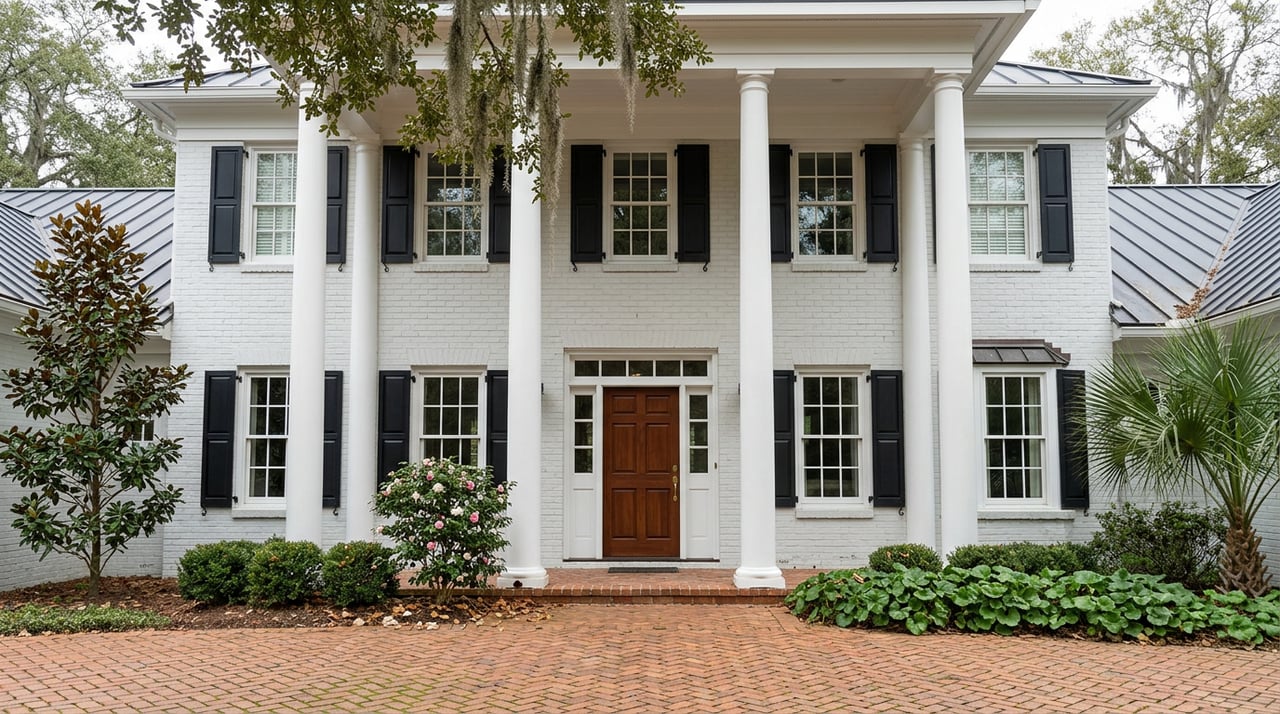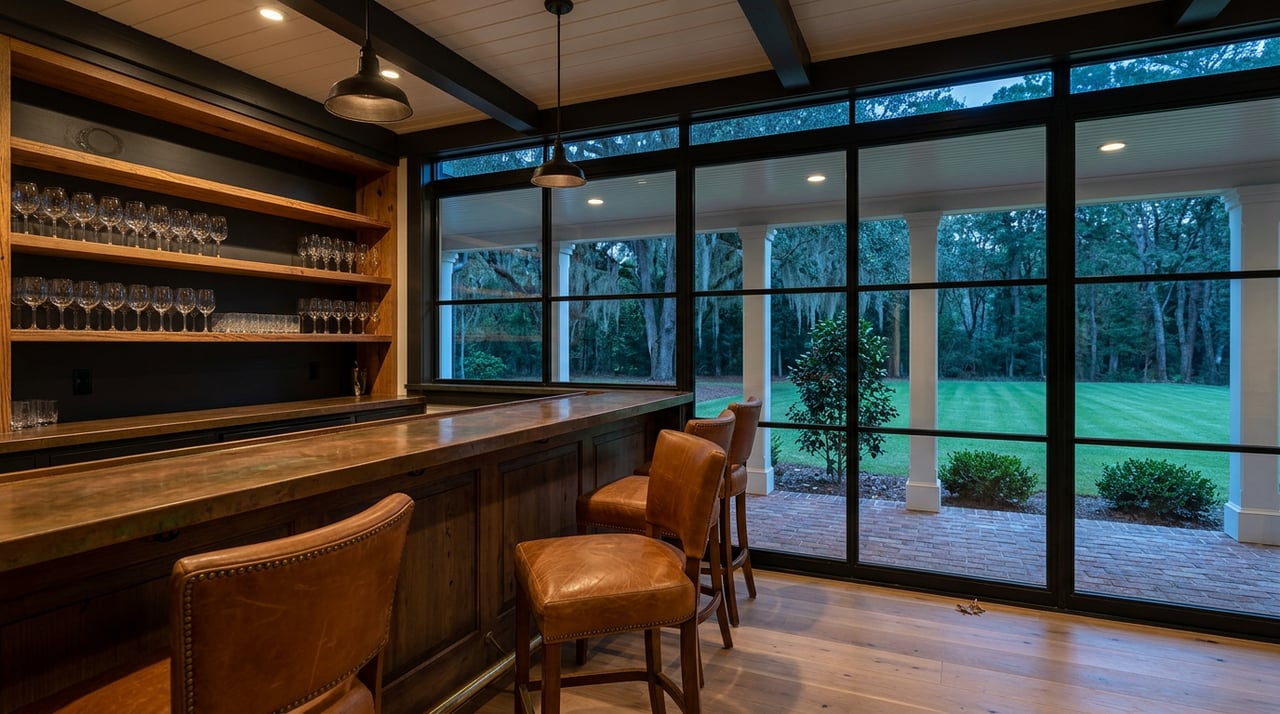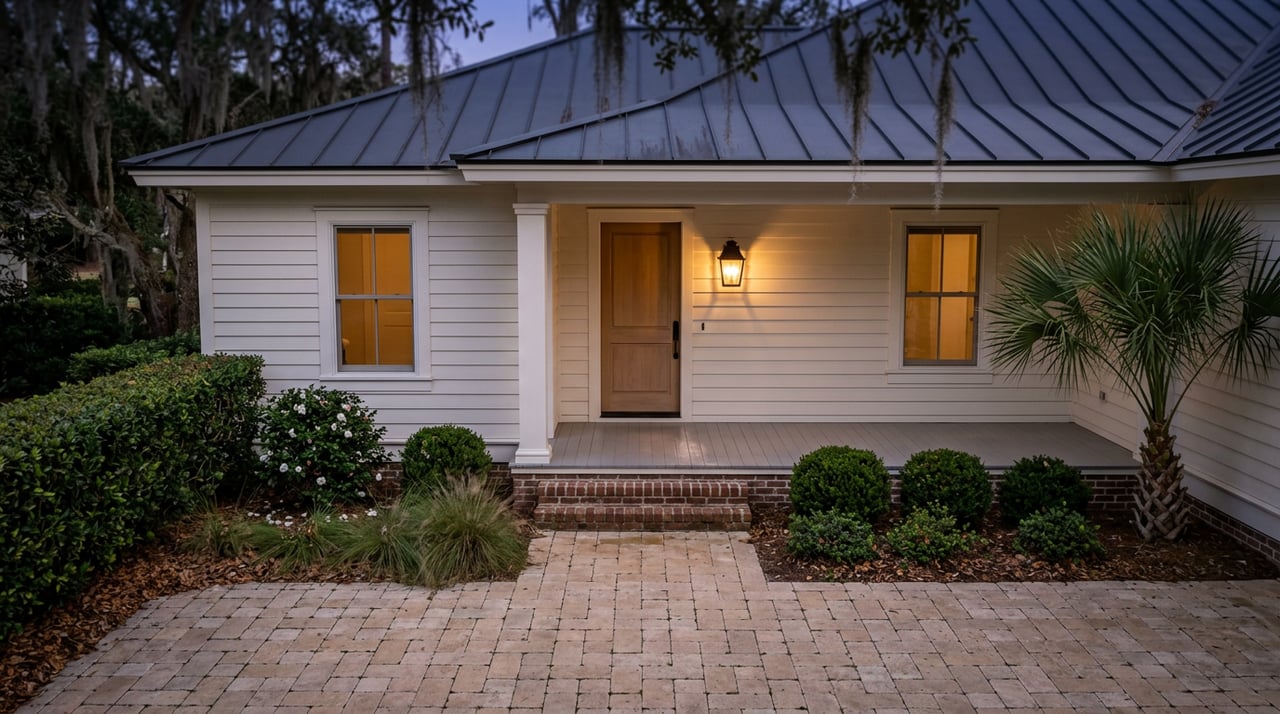
If you pulled up Hampton Hall's sold-home data in June of 2025, you'd have seen a median price of roughly $1.1 million, up about 20 percent from the year before. Pull this year's trailing-12-month figure and the median sale price sits at $880,000, down 21 percent year over year. Same gates, same Pete Dye golf course, same clubhouse. Two numbers that look like they're describing two different neighborhoods.
Neither number is wrong. Both are measuring something real. But if you're comparing Hampton Hall against Belfair, Colleton River, or Oldfield with a portal median as your yardstick, you're about to make a decision based on a statistic that isn't built to answer the question you're asking.
Two Numbers, Same Streets, Fourteen Months Apart
Here's the timeline as the data actually shows it. As of June 2025, Hampton Hall's trailing 12-month median sale price stood at $1,112,500, up 20 percent from the prior year, with a median home price of $1,139,000 and an average sale price of $1,111,724. Homes were selling in 84 days on average, against a national average of 50.
This year's trailing-12-month figure puts the median sale price at $880,000, down 21 percent from a year earlier, with homes taking 91 days to sell against a 56-day national average.
For context, the broader 29910 ZIP code, which covers a wide swath of Bluffton well beyond Hampton Hall's gates, moved the opposite direction over roughly the same stretch. In March 2026, homes in that ZIP code sold at a median of $568,000, up 6.1 percent year over year, with 294 homes changing hands that month alone. Bluffton as a whole was not cooling. Hampton Hall's number moved on its own.
What a Median Actually Measures When a Dozen Homes Sell
A median works well when hundreds of transactions feed it. It works badly when a dozen or so homes make up the entire sample, which is roughly the situation inside a gated community of about 900 homes where only a handful trade hands in any given year.
In a market that small, the median isn't tracking value. It's tracking which specific homes happened to close. If three golf-course estates sell in one window and three smaller cottages sell in the next, the median will swing by hundreds of thousands of dollars without a single home actually losing worth. The number is real. The story it seems to tell is not.
This is why a buyer who anchors to "the median" before ever touring a home is negotiating against a ghost. The relevant number isn't what Hampton Hall's median did last year. It's what comparable homes in your specific price band and lot type have actually sold for, which is a conversation, not a headline stat.
The median in a thin market tells you which homes sold. It does not tell you what your home, or the one you're eyeing, is worth.
Ninety-One Days Isn't a Red Flag Here
The days-on-market gap tells a more useful story than the price swing does. Hampton Hall homes have consistently taken 30 to 40 percent longer to sell than the national average, both in the 2025 snapshot (84 versus 50 days) and the current one (91 versus 56 days). That gap held steady even as the median price flipped direction, which is the tell that this isn't a market losing urgency. It's a market that was never built on urgency in the first place.
Gated golf communities in this price range sell to buyers who are choosing a lifestyle fit, not racing a bidding war. A longer runway on market isn't a sign something's wrong with a listing. It's closer to normal behavior for the category, and a buyer who expects a 30-day close cycle here is working from the wrong playbook.
The Number That Actually Separates Hampton Hall From Its Neighbors
If the median price isn't the useful comparison point between communities, what is? For a buyer weighing Hampton Hall against a peer club like Oldfield, the number that actually changes the math is the cost of joining.
Hampton Hall's own fee schedule, published by the club, lists a one-time Social Membership Fee of $35,000 plus a Capital Fund Contribution of $1,593, both due at closing, totaling $36,593. Golf membership is a separate, optional add-on advertised from as low as $5,000. That's the mandatory entry cost tied to every home purchase.
| Community | Mandatory buy-in structure (2026) |
|---|---|
| Hampton Hall | $35,000 Social Membership Fee + $1,593 Capital Fund Contribution, due at closing |
| Oldfield | $45,000 Club Membership Contribution + $20,000 OCA Initiation Fee, plus $3,780 annual OCA Base Assessment and $7,980 annual Resident Club Dues |
For 2026, Oldfield's one-time commitment alone runs to $65,000, before a cent of the roughly $11,760 in combined annual assessments and dues layered on top. That gap, nearly $28,000 upfront and five figures a year in ongoing dues, is a far more consistent and comparable number than either community's swinging median sale price. It's fixed by the club, published in writing, and doesn't move based on which three houses happened to close last quarter.
Why the Gap Exists
The difference isn't a signal that Hampton Hall's club is less desirable. The club was recognized in 2026 with a Distinguished Club EXCEPTIONAL designation, a status held by fewer than 4 percent of private clubs worldwide. It's a working, well-regarded club, not a discounted one.
The more likely explanation is scale. Hampton Hall was built out by Toll Brothers as a large-footprint community of roughly 900 homes, which means the club's membership base and its dues revenue are spread across a much bigger pool than a boutique equity club with a fraction of the homesites. Communities built on volume tend to price entry lower and rely on a larger membership roll to cover operating costs. Communities built on scarcity charge more to join precisely because there are fewer members to share the load. Neither model is better. They're just different math, and that math is the actual reason one community's entry fee reads dramatically lower than another's, not any difference in the golf course, the clubhouse, or the welcome a new member gets.
What This Means If You're Actually Comparing Communities
If you're a relocating buyer or an investor sizing up Hampton Hall against Belfair, Colleton River, or Oldfield, treat the portal median as background noise and ask two better questions instead.
First, what did homes with your specific bedroom count, lot type, and view actually close for in the last two or three transactions, not the last twelve months of mixed inventory. Second, what does the club's own published fee schedule say the mandatory buy-in and recurring dues actually are, because that number is fixed and comparable in a way the median never will be.
A community with a lower published buy-in and a similar amenity package isn't a lesser choice. It may simply be a larger, differently structured club passing its costs across more members. That's useful information for anyone doing real math on total cost of ownership, and it's the kind of detail a headline median will never surface.
A Few Questions Buyers Ask
Does the swing in Hampton Hall's median mean now is a bad time to sell? Not on its own. A thin-market median moving 20 percent in either direction reflects which homes sold, not a verdict on neighborhood value. Pricing a specific home should rest on recent comparable closings in its size and view category, not the trailing 12-month median.
Is the $35,000 Social Membership Fee the same as a golf membership? No. The Social Membership Fee and Capital Fund Contribution are due at closing and cover access to the clubhouse, fitness center, and pools. Golf membership is a separate, optional purchase advertised starting around $5,000.
Why does Hampton Hall take longer to sell than the national average? The 84-to-91 day range holds steady across both snapshots in this research, which suggests it's structural to the category rather than a signal of a slowing market. Buyers in this price band and lifestyle segment tend to shop on fit, not urgency, which naturally extends time on market compared to national figures dominated by faster-moving, lower-price-point sales.
If you're weighing Hampton Hall against another Lowcountry community and want the real numbers behind the portal headline, The Bradford Group can walk you through the current comparables and the actual club fee structure before you write an offer. Request Your Home Valuation to start with a number built on your specific home, not a thin-market average.